Is Your Shop Floor Working Around Your Material Handling System?
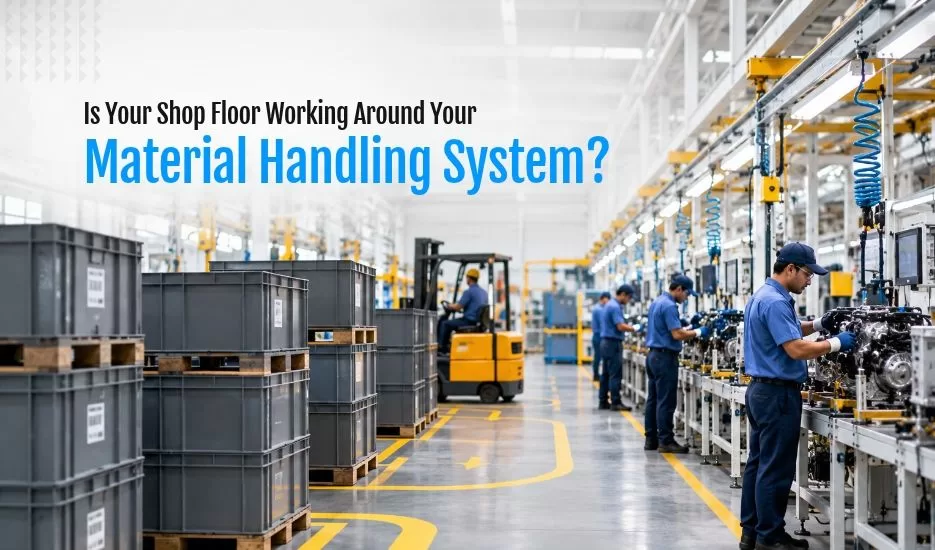
Every plant has operations where people lift, carry or push heavy parts: engine components, sheet-metal panels, welding guns, fixtures and tools. Over time these tasks lead to fatigue, slower cycle times, damaged parts and, in the worst cases, injuries. Overhead rail systems solve the problem by moving the load’s weight onto a structure and leaving the operator to simply guide it.
Why ergonomics is a productivity topic, not just a safety topic
An operator who is not fighting the weight of a part works more consistently through a shift. Positioning is more accurate, so there are fewer rejects and less rework. Handling takes less time because the load travels along a defined path. Safer handling also means fewer interruptions from incidents and near-misses.
What makes a rail system ergonomic?
- Low travel effort: Specialised trolleys give smooth, noiseless, jam-free movement, so loads start and stop with light hand force.
- Light structure: A light aluminium crane profile has less inertia to overcome than a heavy steel girder.
- Defined paths: Rails guide the load along the route, so operators are not manoeuvring free-swinging weight around obstacles.
- Cable and hose management: Cable trolleys keep electrical and pneumatic lines tidy and out of the way. See our rail system parts.
- Safety features: End stops, end caps and safety accessories help protect equipment, material and people in harsh operating conditions.
Real shop-floor examples
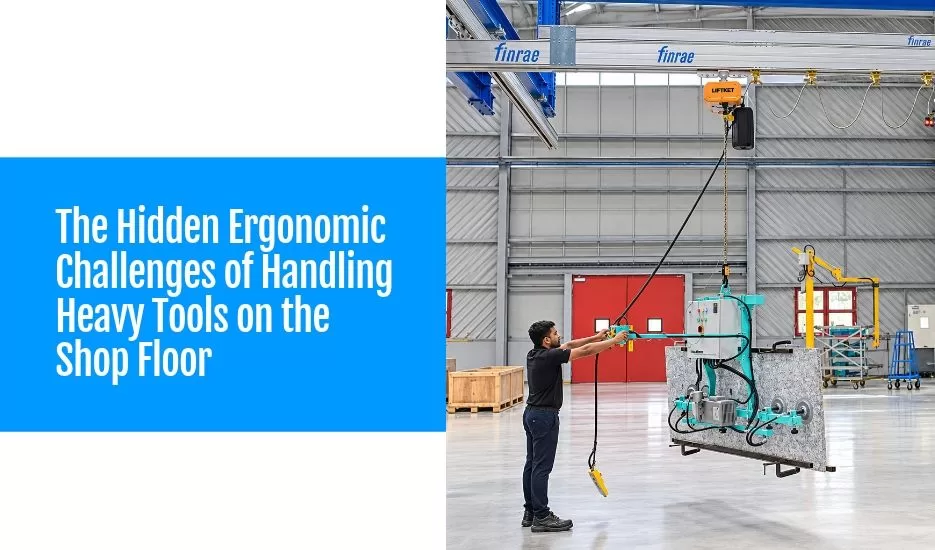
finrae rails are used for handling spot-welding guns in automotive parts manufacturing, transferring heavy sheet-metal components with specialised automation, and moving large parts with a hoist and customised gripper. You can see these on our applications page. In each case the operator guides the load while the rail and hoist carry the weight.
Pairing rails with hoists, balancers and grippers
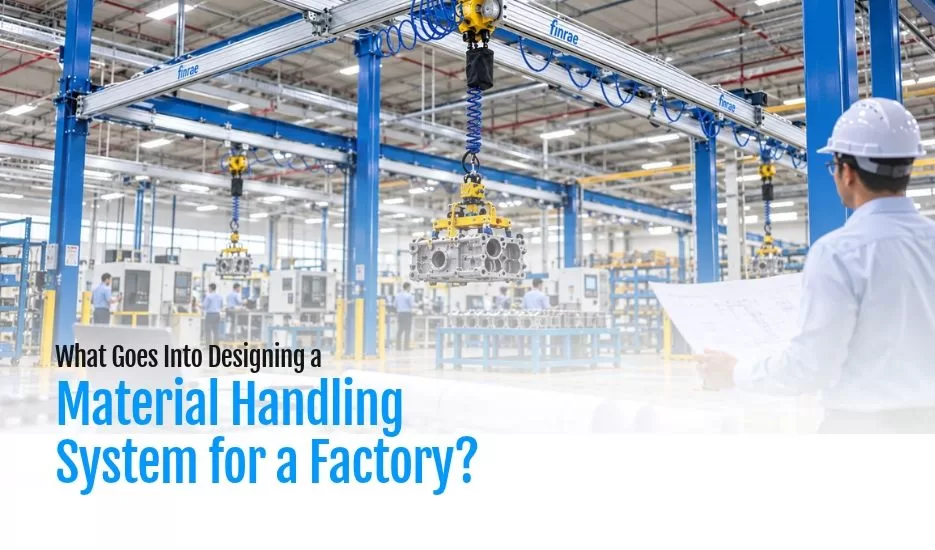
A rail system is the backbone of an ergonomic cell. Add an electric chain hoist for vertical lifting, a balancer to give a part “zero-weight” feel, or a custom gripper to hold awkward shapes, and the whole task becomes repeatable and comfortable. Because finrae systems are modular, you can start simple and integrate more automation later.
How to start
- List the handling tasks that involve manual lifting or awkward positioning.
- Note part weight, size, route and how often each move happens.
- Decide the work area: a straight line, a rectangular bay, or a route with curves.
- Ask an engineer to match a rail layout and crane profile to the task.
Our team offers engineering consultation, product selection, installation and training. Contact us to review your shop floor.