How Hoists, Grippers and Rail Systems Work Together
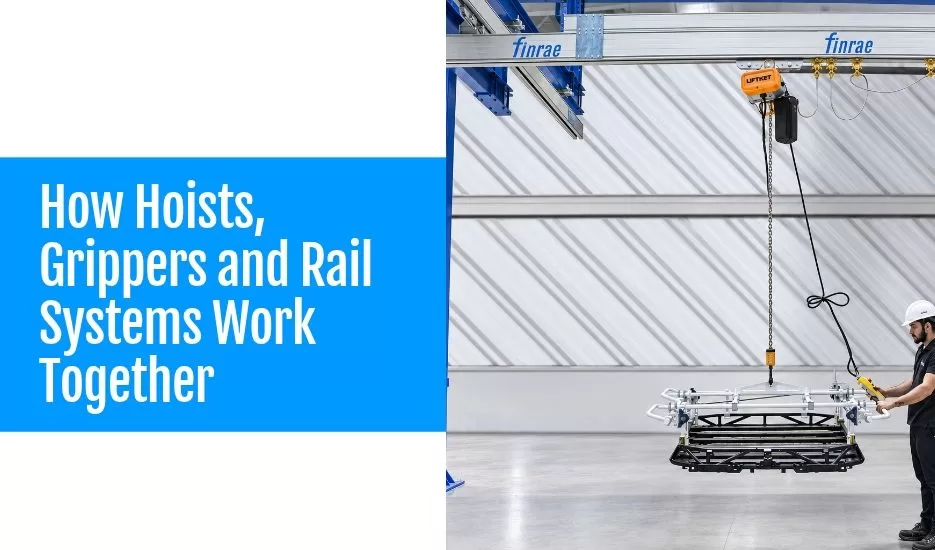
A rail system on its own gives a component a path to travel. Add a hoist and a gripper and the arrangement can lift, hold, move and position a specific component. Each part has its own job.
The rail: the path
The overhead aluminium rail and its load trolley provide smooth, low-noise movement along a defined route. Layouts range from single rails to cross-rail systems, telescopic systems and curved rails.
The hoist: the lifting
A hoist mounted on the trolley provides lifting and lowering assistance, so operators are not carrying the weight themselves. Balancers can serve a similar purpose where suitable.
The gripper: the connection to the component
A customised gripper is designed around the component it holds. It engages with the part, whether a hard-case cover, a sheet-metal component or a tool, so it can be handled securely.
Cables and hoses
Cable trolleys and energy chains guide supply cables and hoses along the rail, keeping them organised and away from the floor.
Examples
- SUV hard-case cover handling: rail, hoist and customised gripper.
- Heavy sheet-metal transfer: rail systems integrated with specialised automation.
- Spot welding gun handling: load trolley with hoist or balancer.
Next step
Describe the component and the route, and our engineers will help you plan the rail, hoist and gripper arrangement. Discuss your application.